Spin-offs & Patents 2025: Innovative Strength Driven by Basic Research
At the University of Zurich, basic research brings about innovative products and applications that help improve many people’s lives. Researchers filed several patents in 2025, and four new spin-offs were created. This is in line with the university’s excellent track record: a total of 168 Spin-offs have been emerged from the University of Zurich since 1997.
The protection of research-based intellectual property is of great importance, as it often paves the way for commercializing innovations in the market. Reflecting the innovation potential at the University of Zurich, research conducted gave rise to 27 patent applications and 57 inventions in 2025.
Following we introduce the four new Spin-offs:
Table of contents
Eviive: Decision-making aids for cancer therapies
The spin-off Eviive has its sights set on complex particles: extracellular vesicles are difficult to detect, tiny – and at the same time a source of great hope for people suffering from cancer. They are sent out by cells as messenger substances to convey biological “messages.” This information is valuable for therapies against various cancers and tumors because it can reveal the communication between immune cells or between immune cells and cancer cells.
The team of experts led by Eviive founders and immunologists Kevin Yim and Richard Chahwan is developing a new method that aims to refine and accelerate this process – based on research conducted at the University of Zurich and experience gained during years of cooperation with the University Hospital Zurich. The idea is that deciphering the messages between the immune system and cancer cells will help to find the most appropriate therapy for each patient – or even answer the question of whether a single treatment or a combination of several therapies is the best choice.
Additional Information


EX3D: Measuring bulging eyes using a smartphone
The autoimmune disorder Graves’ disease, as well as other conditions such as tumors or vascular malformations, can cause the eyeballs to bulge. Measuring the degree of protrusion is an important step in diagnosis and monitoring treatment. For more than a century, an ophthalmological device known as the Hertel exophthalmometer has been used around the world for this purpose. However, it has a major drawback: it does not guarantee consistent measurements. In fact, the results are highly dependent on the examiner.
This is where the spin-off EX3D comes in. It is developing an app that uses smartphone cameras to create a three-dimensional model of the face and, based on this model, to precisely measure the eyeballs. Konrad Weber, professor of neuro-ophthalmology at UZH and senior attending physician at University Hospital Zurich, conducted a study comparing this method with a professional 3D scanner.
Additional Information

Nerai Bioscience: Genetic healing with high-tech procedures
The CRISPR/Cas method, colloquially known as “gene scissors”, offers great hope in medicine, including in the treatment of rare hereditary diseases. At present, however, the method is still limited in its reach, partly because it cannot access all DNA sequences. This is where the UZH spin-off Nerai Bioscience AG comes into play.
As CEO Vincent Forster puts it, the young company was born out of a “fortunate convergence” of expertise from three cutting-edge disciplines brought together by specialists from the laboratory of Gerald Schwank, UZH professor at the Institute of Pharmacology and Toxicology: firstly, directed evolution of the so called CRISPR editor or the development of customized gene therapies in high throughput; secondly, machine learning and AI to further optimize the editors’ performance, and lastly, technologies that make it possible to test the editor for multiple diseases at once. Additionally, Forster explains, Nerai’s editors are designed to be reusable for several diseases – a strategy that should make individual therapies more accessible in the future.
Additional Information


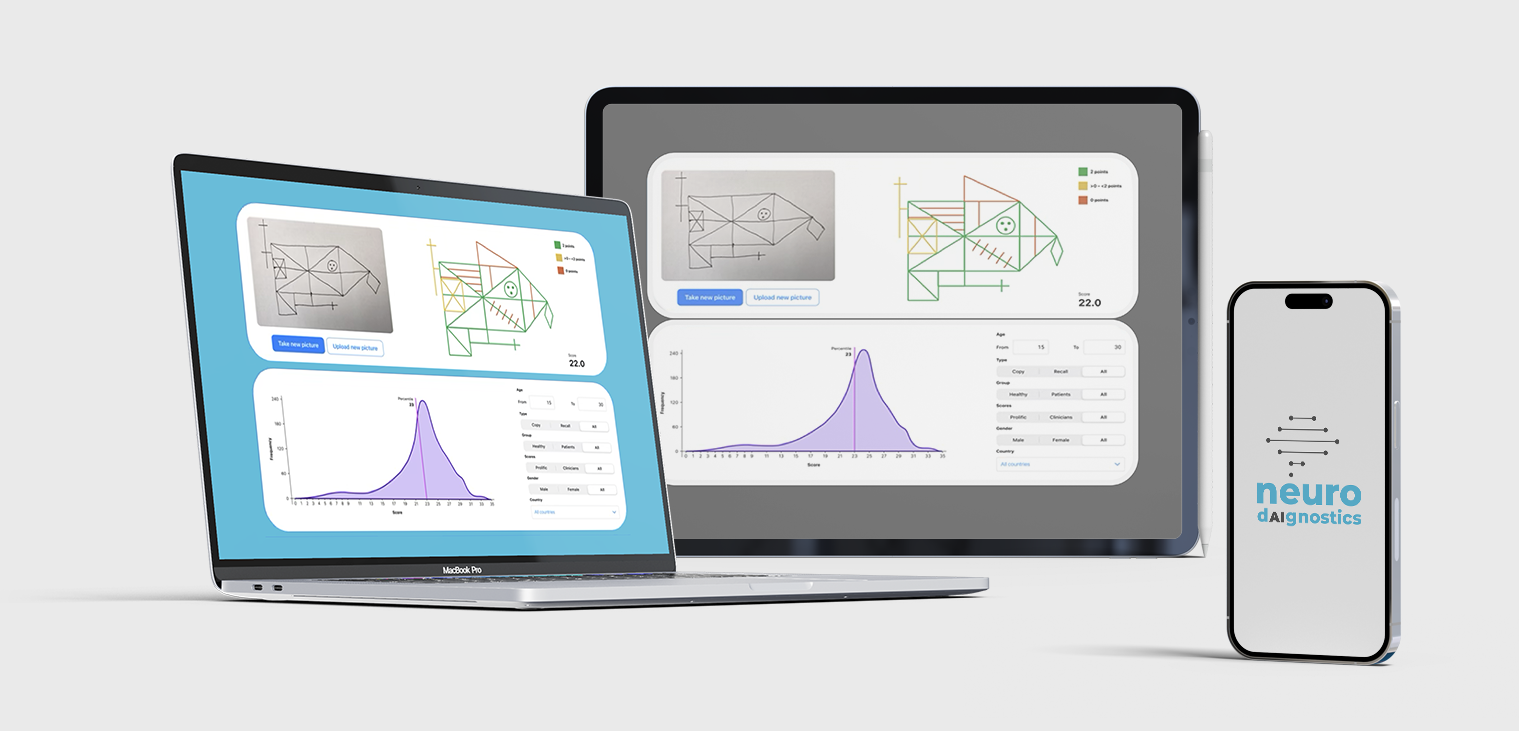
neurodAIgnostics: Accelerating and expanding cognitive testing with AI
Like other branches of the healthcare system, psychiatry and psychology are overburdened. While the waiting time for a neuropsychological examination was around four weeks in 2018, today those affected often have to wait months – partly due to a shortage of specialists and partly due to time-consuming routine work. This is where the UZH spin-off neurodAIgnostics, founded in August 2025, comes in. As an alternative to widely used pen-and-paper cognitive tests, which are common in dementia diagnosis, for example, the team led by Nicolas Langer, professor at the Department of Psychology and co-founder of neurodAIgnostics, is developing a digital platform that makes such examinations more efficient.
Specially developed AI algorithms help to speed up proven workflows – embedded in intuitive mobile applications. One of the advantages of the system is that the automation of evaluations and reports on such tests reduces the time required by more than half, all while opening up new diagnostic possibilities through modern sensor technologies.
Additional Information
This is an extract from the UZH News article covering Spin-offs & Patents 2025.
Read the full article here.